Trustindex verifies that the company has a review score above 4.5, based on reviews collected on Google over the past 12 months, qualifying it to receive the Top Rated Certificate.
About Us
Rifleman Law & Mediation
Rifleman Law & Mediation is a Utah family law firm based in Saratoga Springs with over 17 years of experience representing clients in civil matters including divorce, child custody, child support, alimony, mediation, and post-decree matters. We provide strategic, results-driven representation to clients in Saratoga Springs, Eagle Mountain, Lehi, American Fork, Provo and surrounding communities in Utah County and Salt Lake County. Each matter is approached with a focus on strategy, preparation, and achieving enforceable results—not just temporary solutions. The firm maintains a strong record of client satisfaction and professional standing, supported by independent verification and client feedback.
These principles define how we practice law. We take a deliberate, hands-on approach—listening carefully, communicating clearly, and developing strategies aligned with each client’s objectives. Our commitment to professionalism and ethical representation guides every interaction, whether in negotiation, mediation, or courtroom litigation. Clients rely on us for steady counsel, informed decision-making, and advocacy grounded in respect, credibility, and experience.
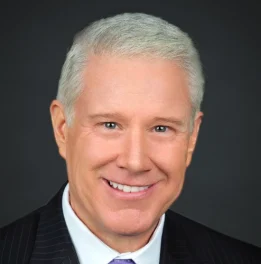
Jeff Rifleman received his Bachelor of Science in Consumer and Community Studies from the University of Utah and his Doctor of Jurisprudence (J.D.) from St. Mary’s University School of Law in San Antonio. He is the founder and managing attorney of Rifleman Law & Mediation and has more than seventeen (17) years of experience advising and representing clients in litigation, transactional matters, and mediation.
Mr. Rifleman represents individuals and businesses in complex and high-conflict legal matters, with a professional approach centered on precision, credibility, and strategic judgment. His practice includes litigation, mediation, arbitration, and advisory services. Over the course of his career, he has appeared before administrative agencies, municipal courts, state courts, and federal courts.
Jeff is known for a disciplined, ethics-driven approach to advocacy. He places a premium on accuracy, candor to the tribunal, and disciplined use of evidence—principles that guide both his litigation strategy and his negotiation style. Clients and colleagues alike recognize him for his ability to cut through noise, identify the controlling legal and factual issues, and present them clearly and persuasively. He does not rely on theatrics or volume; his effectiveness comes from preparation, credibility, and command of the record.
Before returning to private practice, Jeff served as Chief Legal and Compliance Officer for a nationally recognized, Inc.-ranked cosmetic manufacturing company. In that role, he advised the board of directors and C-suite executives on corporate governance, regulatory compliance, risk management, intellectual property, privacy, employment law, commercial transactions, and litigation strategy. That experience sharpened his ability to assess risk, balance competing interests, and provide practical, business-minded legal advice—skills he now brings to individual clients and families facing high-stakes decisions.
Jeff is particularly effective in matters involving complex facts, credibility disputes, and institutional processes. His background in compliance and governance informs his approach to cases involving government agencies, administrative proceedings, and regulatory frameworks, while his litigation experience ensures he is fully prepared to take a matter through hearing or trial when resolution is not possible. He is equally comfortable advising behind the scenes, negotiating durable agreements, or advocating forcefully in contested proceedings.
Jeff approaches mediation and arbitration with the same rigor he brings to litigation. He believes effective dispute resolution requires more than compromise—it requires a clear understanding of legal risk, human dynamics, and long-term consequences. His goal, whether acting as advocate or neutral, is to help parties reach outcomes that are principled, informed, and sustainable.
At every stage of representation, Jeff Rifleman is guided by a simple but demanding standard: tell the truth, know the law, respect the process, and protect the client’s interests with integrity.
17 Years of Legal Experience handling Utah divorce and custody matters
100+ Five-Star Google Reviews from clients across Utah County and Salt Lake County
BBB A+ Rating reflecting consistent professionalism and client satisfaction
This case involves a dispute over whether a post-marital agreement governing property and financial arrangements between spouses was valid and enforceable. The parties entered into a written agreement during the marriage that addressed issues such as the marital residence, division of equity, financial responsibilities, and waiver of alimony. After the parties later divorced, the trial court enforced the agreement and incorporated it into the divorce decree. One party challenged the agreement on appeal, arguing there was no true meeting of the minds, that it was not entered in contemplation of divorce, and that certain conditions precedent were not satisfied.
The Utah Court of Appeals affirmed the trial court, holding that the agreement was a valid and binding contract supported by a meeting of the minds and sufficiently definite terms. The court emphasized that agreements between spouses are generally enforceable under ordinary contract principles so long as they are negotiated in good faith and do not improperly constrain the court’s equitable authority. It rejected arguments that the agreement was invalid due to lack of contemplation of divorce or unmet conditions, concluding that the evidence supported the trial court’s findings and that no abuse of discretion occurred in enforcing the agreement or in the resulting property division.
Courtney v. Courtney, No. 20190321-CA (Utah Ct. App. Feb. 14, 2023) (Unpublished Order of affirmance). Appeal affirmed trial court’s decision.(Appellee Representation) (Pursuant to Utah Rules of Appellate Procedure, Rule 30, this case decision is unpublished and the order will not stand as precedent but will otherwise have the same force and effect as other court decisions.)
Mr. Rifleman for the Appellee (Husband). This appeal by the Appellant Wife arose from a divorce action that ultimately turned on whether a settlement agreement reached in the courtroom was binding. During a January 14, 2019 hearing on discovery disputes, the parties requested time to negotiate and, while remaining in the courtroom, reached a full settlement. The terms were read into the record, and Wife affirmed that she understood the agreement, that it resolved all issues, and that she agreed to be bound. The parties then reduced the agreement to writing and signed it. Two days later, Wife attempted to repudiate the agreement, claiming she did not understand it and had acted under duress. The district court treated her objection as a motion to set aside the settlement, reviewed the audio of the proceedings, and found that she had knowingly and voluntarily entered into the agreement without duress. The court therefore enforced the agreement and entered the divorce decree consistent with its terms.
On appeal, the Utah Court of Appeals narrowed the case to whether the district court erred in enforcing the settlement, declining to address broader allegations regarding attorney conduct or discovery disputes. Applying contract principles, the court held that a binding agreement existed where there was a meeting of the minds and definite terms, and that enforcement is reviewed for abuse of discretion. The court concluded that the record supported the district court’s findings that Wife voluntarily agreed to the settlement and that no improper threat or lack of alternatives established duress. It further held that by entering into the settlement, she waived challenges to prior rulings in the case. Finding no error in the district court’s decision, the Court of Appeals affirmed the decree of divorce.
Ellie v. Zaki, No. 20260590-CA (Utah Ct. App. Aug. 25, 2026) (Unpublished Order of Affirmance). Appeal affirmed trial court’s decision. (Appellee Representation) (Pursuant to Utah Rules of Appellate Procedure, Rule 30, this case decision is unpublished and the order will not stand as precedent but will otherwise have the same force and effect as other court decisions.)
Mr. Rifleman for the Appellee (Ex-Wife, Zaki). This appeal by the Appellant Ex-Husband (Ellie) arose from post-divorce litigation concerning a global settlement agreement reached during a July 31, 2025 court hearing. The parties appeared on a scheduled motion before a court commissioner and then participated in negotiations and placed a stipulation on the record resolving custody-related, financial, tax, and other disputed issues. The Ex-Husband, who was representing himself, personally participated in the negotiations and affirmatively agreed to the settlement in open court. A proposed written order memorializing the agreement was later circulated to the parties, and the Ex-Husband did not object or seek correction before the order was entered on September 15, 2025. More than three months later, the Ex-Husband filed a motion under Utah Rule of Civil Procedure 60(b) seeking to partially set aside the agreement. He alleged fraud, duress, coercion, blackmail, misrepresentation, lack of meaningful consent, and problems involving medical-insurance expenses, while at the same time seeking to retain the custody provisions of the settlement and undo selected financial and tax provisions. The district court concluded that these allegations fell within Rule 60(b)(3), that the motion was filed outside the applicable ninety-day period, and that Rule 60(b)(6) could not be used to avoid that deadline. The court also rejected his argument that the settlement constituted a “trial by ambush,” finding that he had received notice of the scheduled motion hearing, participated freely in the negotiations, had opportunities to object or decline settlement, and agreed to the terms on the record.
On appeal, the Utah Court of Appeals affirmed. The court held that the Ex-Husband’s allegations of fraud, extortion, blackmail, and misrepresentation fell squarely within Rule 60(b)(3), and because his motion was filed more than 100 days after entry of the September 15, 2025 order, it was untimely. The court further held that Rule 60(b)(6) could not be used to circumvent the strict ninety-day limitation applicable to claims that naturally fall within Rule 60(b)(1) through (3). The Court of Appeals separately considered and rejected the Ex-Husband’s Rule 60(b)(4) due-process argument, concluding that parties are not entitled to advance notice that settlement negotiations may occur at a scheduled hearing and that the Ex-Husband had actively participated in the negotiations and confirmed his agreement on the record. The court also rejected his effort to selectively rescind only the financial and tax provisions while retaining the custody provisions, holding that an integrated settlement agreement must be accepted or rejected as a whole. Finding no abuse of discretion or due-process violation, the Court of Appeals affirmed the district court’s denial of the motion to set aside and left the parties’ settlement agreement in full force and effect. The Court denied the Ex-Wife’s request for attorney fees incurred on appeal.
Jeff speaks fluent Spanish and Portuguese.
Founder/Managing Attorney at Rifleman Law & Mediation
Trustindex verifies that the company has a review score above 4.5, based on reviews collected on Google over the past 12 months, qualifying it to receive the Top Rated Certificate.
Stephanie Jensen has her Bachelor of Science in Business with an emphasis on Human Resource Management, is a SHRM-CP, and received her Juris Doctorate from Sandra Day O’Connor College of Law at Arizona State University. Stephanie is a licensed attorney in Utah, SHRM-CP certified, and a court rostered mediator in Arizona and Utah and is also court rostered in Utah for Domestic Mediations. She has a passion to help others through their legal matters, whether through strategic negotiations, mediation, or litigation.
Areas of Practice: Family Law, Estate Planning, Corporate and Employment Law, Mediation.
Trustindex verifies that the company has a review score above 4.5, based on reviews collected on Google over the past 12 months, qualifying it to receive the Top Rated Certificate.
Gavin began his education at Brigham Young University where he earned his Bachelor of Science in Biology. His major included emphasis in chemistry as well as Molecular, Micro and Evolutionary Biology. With his scientific knowledge, Gavin worked in chemical formulations and Research and Development for several years. Thereafter, Gavin continued his education and attended Law School in Arizona where he earned his Doctor of Jurisprudence and practiced law successfully as a trial attorney in the State of Utah.
Gavin Collier has co-founded a number of Utah businesses and is active in Utah business and legal associations. He has represented clients in civil and criminal law proceedings throughout Utah. His background includes work experience in Life Sciences, R&D Formulations, Operations, Business and associated Legal Matters. He regularly consults with organizations regarding Regulatory & Compliance, Civil Litigation, Corporate Governance, Contract Negotiation & Drafting, Strategic Planning & Organizational Structuring, M&A Deal Structuring & Diligence, EBITDA and General Finance, Operations, Quality Systems and Corporate Legal issues.
Trustindex verifies that the company has a review score above 4.5, based on reviews collected on Google over the past 12 months, qualifying it to receive the Top Rated Certificate.
Clients consistently rate Rifleman Law & Mediation highly for professionalism, communication, and results. The firm maintains a strong record of 5-star reviews (more than 100) across independent platforms.
Estoy muy agradecida con Mr. Jeff Rifleman que me aconsejó con su experiencia en mi divorcio. El fue muy profesional y su conocimiento del idioma español fue de gran ayuda para mi en ese momento. Llama a el! El responde inmediatamente.
I am very grateful to Mr. Jeff Rifleman who advised me with his experience in my divorce. He was very professional and his knowledge of the Spanish language was of great help to me at that time. Call Him! He answers immediately!
Our primary focus is family law, divorce, child custody, parent-time, child support, alimony, property division, enforcement of orders, and modifications. We also handle mediation and select related legal matters with a strategy-driven, client-focused approach.
We Provide personalized representation for divorce, child custody, alimony, child support, property division, mediation, enforcement of orders, and decree modifications with client-centered legal guidance.
Child custody, parentage, and child support representation. Establish, modify, or enforce orders with strategic, focused advocacy protecting parental rights throughout Utah County and surrounding communities.
Utah divorce decree enforcement. Compel compliance with support, child custody, and property orders through strategic contempt and court action, protecting your legal rights statewide.
Utah divorce decree modifications. Seek or defend changes to child custody, child support, or alimony based on substantial circumstances, with experienced and strategic representation.
Utah's Unsolemnized Marriage Deadline: What Unmarried Couples Need to Know Before May 5, 2027 By Jeff D. Rifleman, Rifleman Law & Mediation Two people live together, share expenses, and build a…
Tithing and Alimony in Utah: Does Religious Giving Count as a Living Expense? By Jeff D. Rifleman, Rifleman Law & Mediation A couple pays tithing throughout a long marriage. After separation,…
Religion and Child Custody in Utah: Who Decides What a Child Believes After Divorce? By Jeff D. Rifleman, Rifleman Law & Mediation A marriage ends. One parent continues attending the same…











 Patty R.
  Michael C.
  Anna M.
  Darren S.
  Chip H.
  Samantha A.
  Ms. T.