
How Do You Recover Attorney Fees in a Utah Divorce Case?
One of the most common questions in contested divorce litigation is whether one spouse can recover attorney fees from the other. The answer is that attorney fees may be awarded in Utah divorce cases, but they are not automatic, and they generally require evidence, careful presentation, and a legally supportable basis for the request.
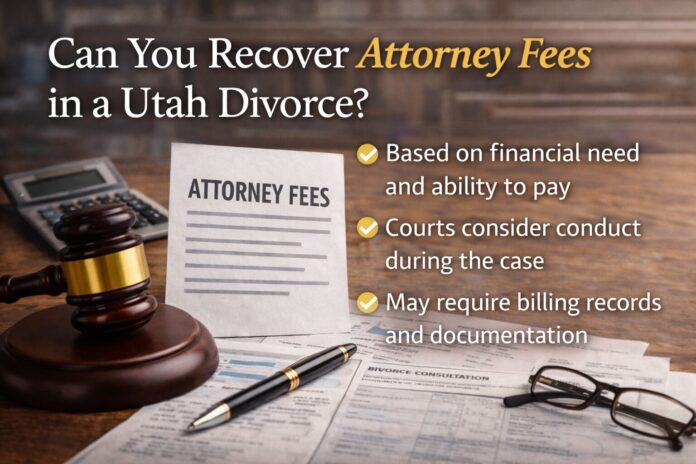
In many cases, people assume that simply prevailing on an issue means the court will order the other side to pay fees. That is not necessarily how it works. Courts often look at several factors, including financial need, the other party’s ability to pay, and whether the fees requested are reasonable under the circumstances.
If your case also involves disputes over compliance, support, or post-decree issues, you may want to review related services involving enforcement, alimony, and child support.
When Attorney Fees May Be Requested
Attorney fees often become an issue in several types of family-law proceedings:
- Contested divorce cases
- Temporary-order hearings
- Discovery disputes
- Motions to enforce court orders
- Post-decree modification proceedings
- Cases involving unreasonable litigation conduct
The legal basis for fees can differ depending on the type of motion, the procedural posture of the case, and the facts supporting the request.
What Courts Commonly Look At
1. Financial need
A party seeking attorney fees often needs to show an actual need for assistance with legal fees. This usually requires accurate financial disclosure and supporting information regarding income, expenses, debts, and access to liquid funds.
2. Ability to pay
The court may also consider whether the other spouse has the ability to contribute toward the requested fees. A fee request is generally stronger when there is a meaningful disparity in income or access to resources.
3. Reasonableness of the fees
Even when fees may be appropriate in principle, the requested amount still matters. Courts generally expect adequate billing support, a reasonable hourly rate, and time entries that are understandable and tied to legitimate legal work.
4. Conduct during the case
Litigation conduct can matter. Cases involving obstruction, noncompliance, avoidable motion practice, or unreasonable behavior may create stronger grounds for fee shifting, especially in enforcement or contempt-related proceedings.
How to Strengthen an Attorney Fee Request
Parties seeking fees should be prepared to present organized billing records, financial information, and a clear explanation of why the requested fees are justified. It is usually not enough to say the other side caused the case to become expensive. The request should show how and why the fees were incurred and why an award is warranted.
Cases involving complex finances may also intersect with high-asset divorce issues, especially where valuation disputes, extensive records, or contested reimbursement issues increase the cost of litigation.
Attorney Fees Are Part of Case Strategy
Fee requests should not be treated as an afterthought. They are often part of the broader litigation strategy, especially where one party’s conduct, the financial imbalance between the spouses, or the procedural history of the case makes fee shifting a realistic issue.
That is also why it is important to keep clear records and approach motion practice carefully. In family-law litigation, credibility and documentation often matter as much as the argument itself.
Speak With a Utah Divorce Attorney About Fees and Litigation Strategy
If your divorce case involves a request for attorney fees, enforcement issues, or a significant imbalance in financial resources, careful preparation matters. To learn more about divorce, custody, alimony, and related family-law litigation, visit Rifleman Law & Mediation.
